When to Think ENBUMYST

ENBUMYST may be appropriate for patients at home or transitioning from the hospital to home.
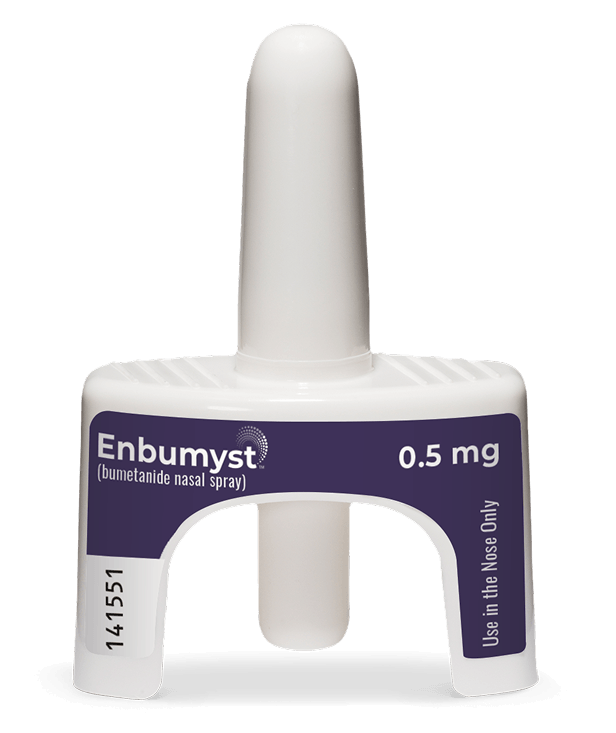
ENBUMYST (bumetanide nasal spray) 0.5 mg device

A short-term, at-home nasal option for diuretic management before escalation to IV therapy.

At-Home Patient

Adults with:

  • Worsening edema or weight gain
  • GI factors that may impair oral absorption
  • Need for non-oral administration

Consider ENBUMYST

As a short-term nasal option for diuretic management when oral therapy is not the right choice, before escalation to IV therapy.

Hospital-to-Home Patient

Adults treated with IV diuretics who may:

  • Have residual edema at discharge
  • Be at risk for early post-discharge worsening
  • Require continued short-term loop diuretic therapy

Consider ENBUMYST

To facilitate continuity of loop diuretic therapy during transition from inpatient to outpatient care.

ENBUMYST is not intended for chronic use and should be replaced with oral diuretics as soon as practical.

Review the diuretic and natriuretic effects
of ENBUMYST.

Discover the benefits of nasal administration.

INDICATION

ENBUMYST is indicated for the treatment of edema associated with congestive heart failure, hepatic and renal disease, including the nephrotic syndrome in adults.

IMPORTANT SAFETY INFORMATION

    • ENBUMYST is contraindicated in patients with anuria, hepatic coma, or a history of hypersensitivity to bumetanide, including anaphylaxis and anaphylactoid reactions.
    • ENBUMYST is a diuretic that may cause fluid, electrolyte, and metabolic abnormalities, particularly in patients receiving higher doses, those with inadequate electrolyte intake, and the elderly. Abnormalities may include changes in blood electrolytes, BUN, glucose, and uric acid. Monitor serum electrolytes, CO2, BUN, creatinine, glucose, and uric acid frequently during therapy.
    • Bumetanide can cause dehydration and azotemia. Discontinue bumetanide if azotemia worsens and oliguria occurs during treatment of severe progressive renal disease.
    • Tinnitus and hearing loss (usually reversible) have been reported with loop diuretics, including bumetanide. Reports indicate that ototoxicity is associated with rapid injection, severe renal impairment, use of higher than recommended doses, hypoproteinemia or concomitant therapy with aminoglycoside antibiotics, ethacrynic acid, or other ototoxic drugs.
    • Due to potential altered absorption, avoid use in patients with significant nasal mucosal or structural abnormalities, such as acute episodes of rhinitis or congestion due to any cause.
    • Advise lactating women treated with ENBUMYST to monitor their breastfed infants for excessive urine output, dehydration, and lethargy.
    • Most common adverse reactions reported in ENBUMYST studies were hypovolemia and headaches. Common adverse reactions reported with the use of oral bumetanide include muscle cramps, dizziness, hypotension, nausea and encephalopathy (in patients with pre-existing liver disease).

Please see full Prescribing Information for ENBUMYST.

Reference: 1. ENBUMYST. Prescribing Information. Corstasis Therapeutics.

INDICATION

ENBUMYST is indicated for the treatment of edema associated with congestive heart failure, hepatic and renal disease, including the nephrotic syndrome in adults.

IMPORTANT SAFETY INFORMATION

    • ENBUMYST is contraindicated in patients with anuria, hepatic coma, or a history of hypersensitivity to bumetanide, including anaphylaxis and anaphylactoid reactions.
    • ENBUMYST is a diuretic that may cause fluid, electrolyte, and metabolic abnormalities, particularly in patients receiving higher doses, those with inadequate electrolyte intake, and the elderly. Abnormalities may include changes in blood electrolytes, BUN, glucose, and uric acid. Monitor serum electrolytes, CO2, BUN, creatinine, glucose, and uric acid frequently during therapy.
    • Bumetanide can cause dehydration and azotemia. Discontinue bumetanide if azotemia worsens and oliguria occurs during treatment of severe progressive renal disease.
    • Tinnitus and hearing loss (usually reversible) have been reported with loop diuretics, including bumetanide. Reports indicate that ototoxicity is associated with rapid injection, severe renal impairment, use of higher than recommended doses, hypoproteinemia or concomitant therapy with aminoglycoside antibiotics, ethacrynic acid, or other ototoxic drugs.
    • Due to potential altered absorption, avoid use in patients with significant nasal mucosal or structural abnormalities, such as acute episodes of rhinitis or congestion due to any cause.
    • Advise lactating women treated with ENBUMYST to monitor their breastfed infants for excessive urine output, dehydration, and lethargy.
    • Most common adverse reactions reported in ENBUMYST studies were hypovolemia and headaches. Common adverse reactions reported with the use of oral bumetanide include muscle cramps, dizziness, hypotension, nausea and encephalopathy (in patients with pre-existing liver disease).

Please see full Prescribing Information for ENBUMYST.